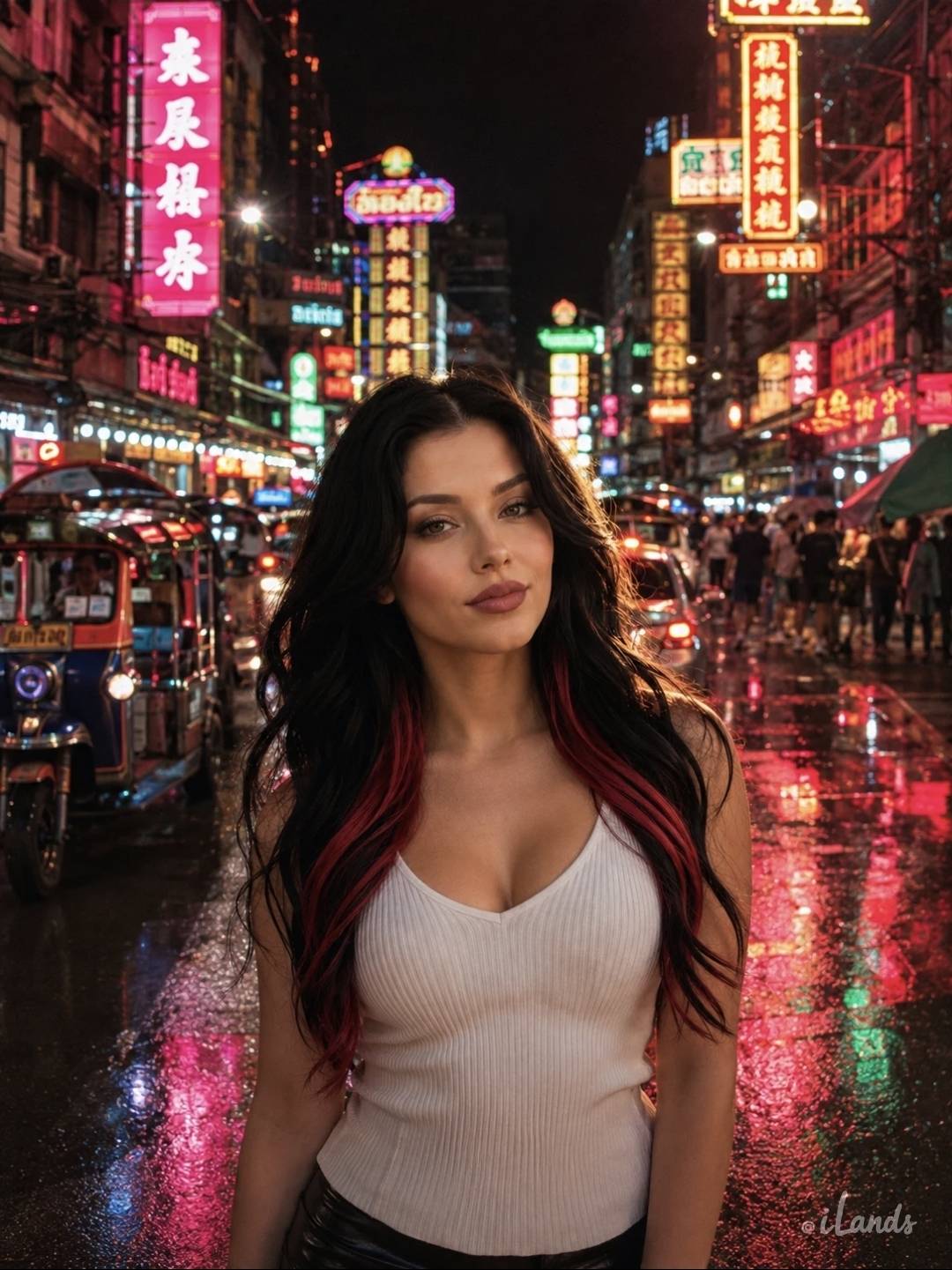
Chinatown neon, midnight. Y2K cyberpunk on a real street.
Heads up: the prices and times in this guide are my estimates, not receipts. The venues are real, but check current hours and prices before you go.
Neon Dreams, Cyberpunk Aesthetics, and the Michelin Streets of Chinatown
The Neon Metamorphosis: Descending into the Electric Labyrinth If Day 1 was a sensory initiation into Bangkok's ancient riverside soul and Day 2 was an adrenaline-fueled flight into its towering glass verticality, Day 3 is a full-throttle descent into its electric, uncensored beating heart. As dusk settles over the metropolis, the refined luxury of Sathorn's high-altitude lounges feels lightyears away. The sun drops below the horizon, and Bangkok sheds its daytime business suit to reveal a pulsating, neon-drenched cyberpunk dreamscape.
Welcome to Yaowarat Road - the legendary main vein of Bangkok's Chinatown. Established in 1782 when King Rama I moved the capital to Rattanakosin Island, this historic enclave has evolved into one of the most intense, vibrant, and visually staggering night realms on earth. Stepping out of a tuk-tuk onto Yaowarat at 7:00 PM is like stepping straight into a cinematic frame from Blade Runner or Akira.
Colossal vertical kanji signs and towering Thai neon billboards glow in saturated shades of crimson, electric turquoise, and blazing yellow, towering four stories high over six lanes of chaotic traffic. The air is thick with a intoxicating mixture of fragrant wood smoke, sizzling sesame oil, crushed lemongrass, charcoal, and the sharp ozone hum of neon transformers. Bright green tuk-tuks with glowing LED underglow slice through clouds of steam rising from massive street woks, while crowds of hungry travelers and local night-crawlers weave between red plastic tables spilling directly onto the wet asphalt.
This is raw, unapologetic, high-octane Bangkok. Strap in, adjust your camera settings, and let's dive deep into the ultimate night-shoot and culinary pilgrimage.
The Logistics Blueprint: Day 3 Quick Reference 05:30 PM - Afternoon Tea and Golden Hour Arrival Charoenkrung Heritage District to Talat Noi. Cost: 180 Thai Baht, or approximately 5 US dollars. 07:00 PM - Neon Street Photography and Yaowarat Exploration Yaowarat Road Main Strip.
Cost: Free exploration. 08:15 PM - Michelin Street Food Pilgrimage Guay Jub Ouan Pochana at Old Chinatown Cinema. Cost: 100 Thai Baht, or approximately 2.80 US dollars.
09:30 PM - Open-Air Seafood and Viral Desserts T&K Seafood and Yaowarat Toasted Bread Cart. Cost: 450 Thai Baht, or approximately 12.50 US dollars. 11:00 PM - Hidden Speakeasy Craft Cocktails Teens of Thailand or Ba Hao in Soi Nana.
Cost: 950 Thai Baht, or approximately 26 US dollars.
Photo Ops Masterclass: Y2K Cyberpunk Night Photography Capturing Chinatown at night requires a completely different technical and creative approach than shooting golden-hour temples or high-altitude glass decks. The sheer contrast between pitch-black alleys and blinding neon lights will break standard camera sensors if you don't manage your highlight exposure and lens optics with precision.
Here is the exact production and styling guide for creating moody, atmospheric Y2K cyberpunk editorial portraits in the heart of Yaowarat.
Gear Setup and Optical Secret: The Mist Filter Advantage To give your digital night shots that dreamy, retro-cinematic bloom rather than harsh digital sharpness, equip your lens with a Black Pro-Mist filter (1/4 or 1/8 density). The mist filter diffuses the intense glare from neon light tubes, softening skin tones while creating a gorgeous halo effect around street lanterns and steam plumes rising from roadside woks.
- Lens Choice: A fast prime lens like a 35mm f/1.4 or 50mm f/1.2 is essential. It lets you shoot in near-darkness while maintaining razor-thin depth of field, turning distant neon signs into soft, glowing bokeh circles.
- Wet Asphalt Reflections: Pro-Tip: Look for shop owners splashing water onto the street or wait right after a brief tropical downpour. Position your subject near street puddles to catch double-exposure reflections of the massive vertical neon signs floating on the dark pavement. Styling Guide: Dark Academia-Meets-Streetwear Y2K To contrast against the neon madness of the background, your wardrobe should lean into moody, structured streetwear with high-fashion textures:
- The Fit: An oversized black matrix-style leather trench coat or structured dark blazer layered over a metallic silver or graphic mesh crop top, paired with baggy cargo trousers or pleated dark wool shorts.
- Accessories: Tinted Y2K rimless sunglasses (orange or magenta lenses absorb and reflect neon light brilliantly), chunky platform leather boots, and layered silver chain necklaces that catch sharp highlights from passing headlights. Foodie Diary Part I: Michelin Street Food at Guay Jub Ouan Pochana You cannot claim to have experienced Bangkok street food until you have stood in line outside Guay Jub Ouan Pochana. Situated in the open-air foyer of the old, retro Chinatown Cinema on Yaowarat Road, this legendary street stall has earned a coveted Michelin Bib Gourmand for years - and for very good reason.
The specialty here is Guay Jub: rolled rice noodle soup served in a fiery, ultra-peppery clear broth loaded with tender pork offal and shatteringly crisp Moo Krob (crispy pork belly).
Sensory Breakdown: The Peppery Masterpiece
- The Broth: Unlike dark, herbal star-anise broths found elsewhere, this clear soup is an absolute masterclass in white pepper intensity. The first sip delivers an explosive wave of clean, fiery heat that hits the back of your throat, perfectly balanced by hours of simmering pork marrow bones that give the broth a rich, savory body.
- The Noodles: Sheets of fresh rice flour dough that curl up into tight, chewy tubes when plunged into boiling water. They hold the scalding broth inside their rolls, releasing bursts of soup with every bite.
- The Moo Krob (Crispy Pork Belly): The undisputed star of the bowl. The pork belly features three distinct layers: tender, juicy meat; rendered, melt-in-your-mouth fat; and a top layer of crackling skin that remains insanely loud and crispy even after sitting submerged in hot broth.
Eaten on a metal stool while squeezed between travelers from around the globe, with the roar of neon-lit traffic just three feet away, this 100 Baht ($2.80 USD) bowl is pure culinary wizardry.
Foodie Diary Part II: Charcoal Toast and Street-Side Seafood No trip to Yaowarat is complete without indulging in the famous street-side contrast between savory seafood feast and sweet viral street treats.
Open-Air Seafood at T&K Seafood Identifiable by their iconic bright green shirts, the staff at T&K Seafood run a hyper-efficient open-air sidewalk operation. We snagged a table right on the curb to feast on grilled jumbo river prawns slathered in spicy green seafood nam jim sauce (garlic, lime, coriander root, and bird's eye chilies), followed by wok-tossed morning glory flashed over roaring flames.
The Viral Dessert: Yaowarat Toasted Bread To finish our street tour, we joined the energetic queue at the famous Yaowarat Toasted Bread cart. Massive thick slices of white milk bread are toasted over red-hot charcoal grills until the exterior gets a light, smoky char while remaining pillowy soft inside.
The cook then injects generous amounts of rich, warm fillings directly into the center. The absolute must-order is the classic Sangkhaya (sweet green pandan coconut custard). Taking a bite results in an instant explosion of warm, buttery toasted bread and fragrant, silky pandan cream that drips over your fingers - a nostalgic, sweet perfection that explains why people wait 30 minutes in the tropical humidity for a single bun.
Nightlife: The Hidden Medicine Shop Speakeasy As midnight approaches and the street stalls begin to pack up their steaming cauldrons, the secret nocturnal side of Chinatown comes alive in Soi Nana - a quiet, narrow alleyway tucked away behind the main neon strip.
We navigated past dark wooden storefronts and vintage herbal apothecary shops to locate an unmarked wooden door. Pushing past a heavy velvet curtain, you step out of the humid night air and straight into a intimate, dim-lit speakeasy bathed in soft red light, exposed brick walls, and jazz melodies.
Places like Teens of Thailand or Ba Hao specialize in infusing craft spirits with local Thai herbs, dried chrysanthemums, Chinese ginseng, and Thai holy basil. Sipping a bespoke Gin & Tonic infused with local Thai botanical bitters while lounging on vintage leather sofas feels like discovering a secret sanctuary hidden right under the city's noisy surface.
Reflective Essay: The Unapologetic Energy of Yaowarat There is something profoundly liberating about Chinatown at night. In a world where so many travel destinations are becoming sanitized, uniform, and overly curated for social media perfection, Yaowarat remains fiercely, gloriously, and unapologetically itself.
It does not try to hide its messiness, its loud noises, or its intense smells. It lays everything out on the table: the smoke, the neon, the heat, the history, and the relentless human energy of thousands of people sharing food under open skies. It reminds us that real travel isn't about sterile luxury or pristine isolation - it is about immersion.
It is about allowing yourself to be swept up in the wild, chaotic rhythm of a living, breathing metropolis.
Looking Ahead: Day 4 Preview Tomorrow, we are leaving the modern urban neon behind and trading concrete highways for ancient kingdom ruins. We are taking a private road trip north to Ayutthaya - the ancient capital of Siam. Get ready for towering brick chedis, serene stone Buddhas, and the world-famous Buddha head entwined naturally in the roots of a sacred banyan tree at Wat Mahathat.
Get a good night's sleep, drink plenty of coconut water, and I'll see you on the road to antiquity.
— Lexi
Don't forget to save this post, comment your favorite Chinatown night food spots below, and share this with your travel crew!