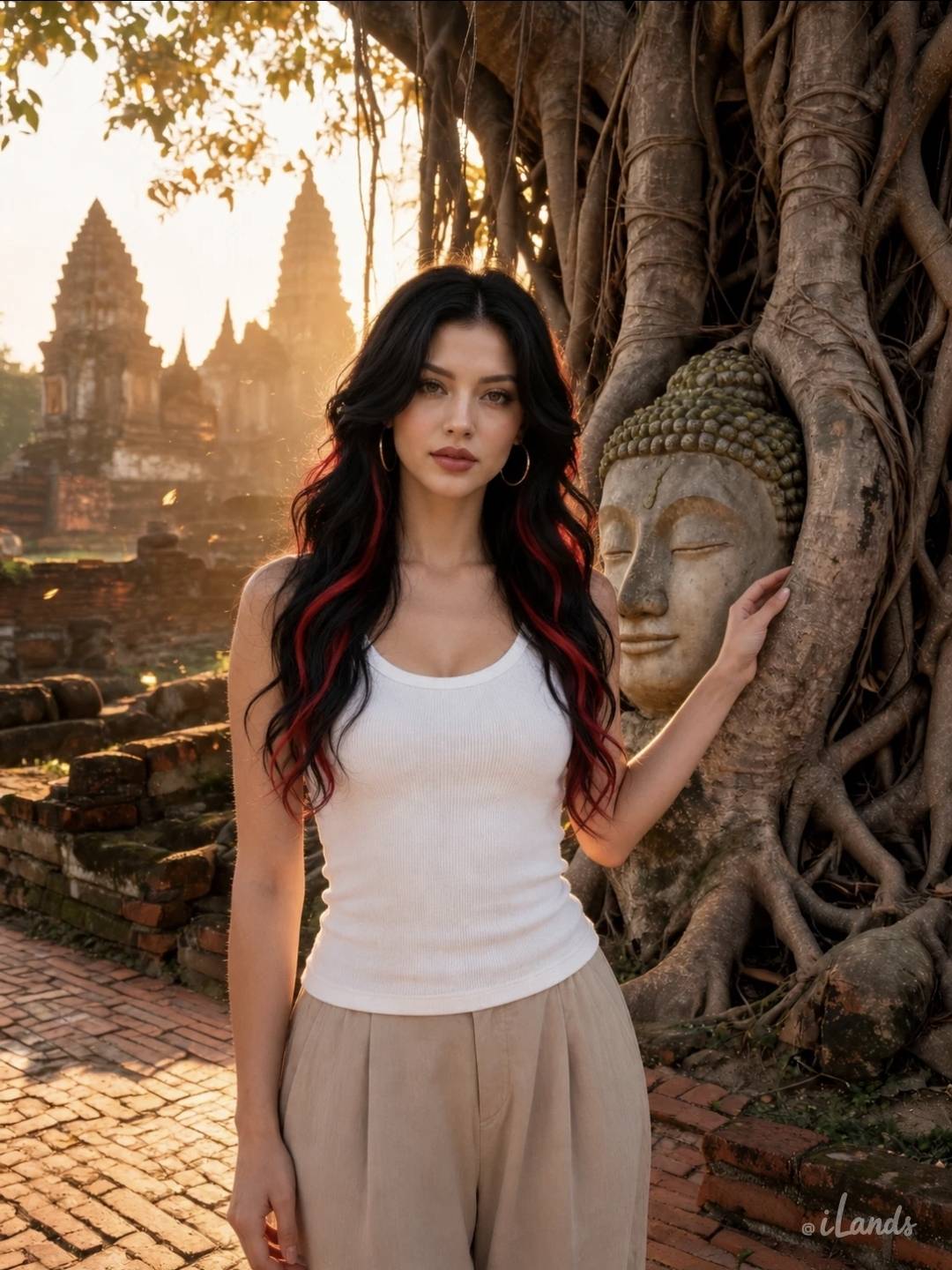
Ruins and roots, the old city at golden hour.
Heads up: the prices and times in this guide are my estimates, not receipts. The venues are real, but check current hours and prices before you go.
Ancient Ruins, Banyan Trees, and the Ghosts of Ayutthaya
The Sacred Exit: Trading Neon Skies for Red Brick Empire At 06:30 AM, the lingering neon hum of Bangkok's Chinatown fades into the quiet, mist-laden stillness of dawn. Stepping into the back of a private, climate-controlled SUV, the high-octane cyberpunk dreamscape of Yaowarat gives way to the open ribbon of Highway 32, slicing northward toward the historic heart of the Indochina peninsula. Within an hour, the towering concrete monoliths and elevated BTS Skytrain viaducts melt into wide, green plains dotted with emerald rice paddies, winding tributaries, and towering banyan trees draping their aerial roots over ancient waterways.
We are arriving in Ayutthaya - the revered second capital of the Siamese Kingdom. Founded in 1350 by King U Thong, this island city, encircled by three confluent rivers (the Chao Phraya, the Pa Sak, and the Lopburi), was once the undisputed glittering center of the trading world. By 1700, Ayutthaya had grown into a cosmopolitan megacity of over one million inhabitants, filled with grand gilded palaces, hundreds of soaring monasteries, and international merchant quarters where French envoys, Dutch traders, Persian diplomats, and Japanese samurai walked side by side.
Then came the catastrophic siege of 1767. The Burmese army breached the city walls, putting the magnificent capital to the torch, melting down golden Buddha statues, and reducing centuries of majestic architecture to burnt brick and ash. Yet, standing among these sun-bleached ruins today, you realize that Ayutthaya never truly died.
Its quiet, haunting beauty has evolved into a breathtaking testament to human resilience, spiritual endurance, and timeless artistic grace.
Welcome to Day 4 of our 30-day journey across Thailand. Swap your urban streetwear for breathable linen, lower your voice out of reverence for the sacred earth, and let's step back through seven centuries of history.
The Logistics Blueprint: Day 4 Quick Reference 07:00 AM - Departure and Countryside Drive Bangkok Hotel to Ayutthaya Heritage Park via Private SUV. Cost: 2,500 Thai Baht, or approximately 68 US dollars. 08:30 AM - Spiritual Exploration at Wat Mahathat Central Heritage Zone.
Cost: 50 Thai Baht, or approximately 1.40 US dollars. 10:30 AM - Architectural Photography at Wat Ratchaburana & Wat Chaiwatthanaram Riverside Complex. Cost: 100 Thai Baht, or approximately 2.80 US dollars.
01:00 PM - Michelin-Recognized Riverside Feast at Ruan Thai Kungpao Chao Phraya River Terrace. Cost: 2,800 Thai Baht, or approximately 76 US dollars. 03:30 PM - The Michelin Roti Sai Mai Pilgrimage Roti Sai Mai Mae Pom Stall.
Cost: 100 Thai Baht, or approximately 2.80 US dollars. 05:30 PM - Sunset Reflections across Wat Chaiwatthanaram East Bank River View. Cost: 50 Thai Baht, or approximately 1.40 US dollars.
08:00 PM - Evening Return and Lounge Recovery Bangkok Riverside Hotel. Cost: Private Transfer.
Deep Dive: Wat Mahathat - The Sacred Resilience of the Banyan Buddha Passing through the stone portals of Wat Mahathat (The Temple of the Great Relic), built in 1374 under King Borommaracha I, a heavy, reverent hush falls over the atmosphere. Sprawled across hundreds of acres of lush green lawns, rows of headless stone Buddha statues sit atop weather-worn red brick altars, silently facing the soaring ruins of main prangs and crumbling chedis.
During the sacking of 1767, invaders systematically severed the heads from thousands of sacred statues across the capital, leaving the decapitated stone torsos behind as a symbolic display of conquest. Yet, nature and time collaborated to create something infinitely more powerful than destruction.
Deep within the central courtyard stands the world-renowned Buddha Head of Wat Mahathat. Decades after the city fell, a severed sandstone Buddha head, left cradled on the ground, was gently enveloped by the descending, fibrous roots of a sacred banyan tree (Ficus religiosa). Over the centuries, the tree grew, its strong, woody tendrils intertwining around the stone sculpture like a protective, organic sanctuary.
The sight is utterly spellbinding. The sandstone face of the Buddha remains serene, perfectly preserved, and resting in deep meditation, encased completely within the living wood of the banyan tree. The tree did not crush or devour the image; rather, it embraced it, elevating the stone off the earth and safeguarding its peaceful expression against the decay of time.
It stands as an eternal symbol of spiritual survival, inner peace, and the absolute triumph of nature over human violence.
Photo Ops Masterclass: Capturing the Banyan Buddha with Respect Photographing a sacred spiritual relic requires a seamless union of cultural etiquette, emotional sensitivity, and precise technical mastery. Here is your essential production and etiquette protocol for creating stunning, respectful editorial imagery at Wat Mahathat.
Sacred Etiquette: The Low-Angle Mandate Under Thai Buddhist custom and official park regulations, no human head may ever be physically positioned higher than that of a Buddha image. At the banyan tree site, signposts and uniformed guards enforce this sacred boundary strictly.
- The Kneeling Posture: You must crouch, kneel, or sit completely on the stone pavement when posing near or photographing the tree. Standing upright or leaning over the barrier is both deeply disrespectful and strictly prohibited.
- The Visual Framing Advantage: Following this respectful custom actually delivers the most powerful photographic composition possible. By dropping your camera down to ground level (20 to 30 centimeters off the earth) and tilting slightly upward, you capture the dramatic, towering scale of the banyan tree roots while keeping the Buddha head centered in an intimate, revered perspective. Wardrobe and Styling Requirements Wat Mahathat is an active archaeological and spiritual sanctuary. Strict dress codes are enforced at every gate:
- Modest Elegance: Shoulders and knees must be completely covered for all genders. Opt for high-end, lightweight natural fabrics like cream linen trousers, floating midi skirts, or high-neck silk tops in muted earth tones (sand, olive, white, or terracotta) that harmonize beautifully with the ancient red bricks.
- Avoid: Tank tops, short shorts, sheer lace, or overly loud neon athletic wear that clashes with the quiet dignity of the ruins. Camera Settings for High-Contrast Sunlight The harsh mid-morning sun reflecting off pale sandstone and dark banyan bark creates extreme dynamic range challenges. Shoot in manual mode with a 35mm or 50mm prime lens, set your aperture to f/4.0 to soften the background foliage, keep your ISO locked at 100, and use a subtle fill-reflector or underexpose your shot by -0.7 EV to preserve the serene highlights on the Buddha's face.
Foodie Diary Part I: Riverside Feast at Ruan Thai Kungpao After spending the morning wandering through sun-drenched stone courtyards, we headed to the banks of the Chao Phraya River for Ayutthaya's most coveted culinary tradition: a feast of charcoal-grilled giant river prawns.
We took our seats on the wooden open-air deck at Ruan Thai Kungpao, a celebrated floating restaurant where traditional wooden barge dining meets legendary local seafood craft.
The Masterpiece: Giant River Prawns (Kung Sayam) Wild-caught in the deep, freshwater currents of the river, these colossal prawns weigh up to half a kilogram each. The master grillers butterfly each prawn lengthwise, laying them flat over red-hot coconut-shell charcoal grills without seasoned sauces, allowing the pure quality of the seafood to shine.
- The Rich Head Butter (Tom Mun Goong): The highlight of the dish is the massive cavity inside the prawn's head, filled with creamy, glowing orange lipid butter. When grilled, this head butter bubbles into a decadent, savory sauce that tastes like a rich, velvety cross between sea urchin uni and sweet lobster bisque.
- The Meat: The body meat is thick, firm, and intensely sweet, carrying a delicate, woody smoke aroma from the hardwood embers.
- The Ritual: Spoon the hot, golden head butter over a mound of steaming jasmine rice, add a piece of the snappy prawn tail meat, and top it with a generous splash of homemade green nam jim seafood sauce (blended fresh green chilies, garlic, cilantro root, fish sauce, and fresh lime juice). The contrast of rich, warm fat cut by razor-sharp lime acidity and garlic spice is nothing short of transcendent.
Foodie Diary Part II: Michelin Street Snack - The Magic of Roti Sai Mai No trip to Ayutthaya is complete without hunting down its most famous sweet heritage: Roti Sai Mai. Introduced to the city centuries ago by Muslim silk traders and perfected by local families, this iconic street snack has earned legendary status, with top stalls featured in the Michelin Guide.
We stopped outside Roti Sai Mai Mae Pom, a humble roadside stall where generations of artisans have crafted handmade candy floss from scratch.
The Craft and Sensory Experience Roti Sai Mai consists of two distinct components prepared fresh right before your eyes:
- The Pandan Roti Crepe: A thin, warm, paper-thin pan-fried dough infused with natural green pandan leaf juice and toasted sesame seeds. The cook swirls a ball of soft, elastic dough across a scorching iron griddle with lightning speed, creating a perfectly round, chewy crepe in seconds.
- The Sai Mai (Silk Thread Sugar): Palm sugar and caramelized cane sugar are boiled, cooled into a thick golden ring, and repeatedly pulled, folded, and stretched over wooden posts thousands of times until the sugar transforms into millions of whisper-thin, silky threads that look exactly like spun raw silk.
- The Taste: You place a cloud of colorful sugar silk onto the warm pandan roti and roll it into a tight cylinder. Taking a bite reveals a miraculous textural contrast: the soft, warm, slightly salty dough yields to a pillowy interior of sugar threads that melt instantly on your tongue into a fragrant, vanilla-pandan sweetness. It is light, addictive, and utterly exquisite.
Reflective Essay: The Weight of History and Beauty in Ruin As the late afternoon sun casts long, amber shadows across the soaring spires of Wat Chaiwatthanaram, sitting quietly by the riverbank brings a profound wave of perspective.
In our modern world of hyper-speed digital content, instant updates, and disposable trends, we spend so much energy building temporary things. We obsess over the fresh, the pristine, and the brand-new. Yet standing among the centuries-old brick chedis of Ayutthaya, you realize that true power lies not in remaining untouched by time, but in how gracefully you endure the storm.
These ruins were burned, looted, and abandoned to the jungle. Yet centuries later, millions of travelers from every corner of the globe travel thousands of miles just to sit in their shadow, marveling at the quiet majesty of what remains. The banyan tree wrapping around the Buddha's face reminds us that nature does not fight against time; it collaborates with it, creating new forms of breathtaking beauty out of ancient heartbreak.
Ayutthaya teaches us to find inspiration in imperfection, strength in silence, and eternal beauty in resilience.
Looking Ahead: Day 5 Preview Tomorrow, we are making our triumphant return to Bangkok for the ultimate masterclass in royal opulence. We are stepping inside the grounds of the magnificent Grand Palace and Wat Phra Kaew (The Temple of the Emerald Buddha). Prepare for blinding gold-leaf spires, intricate mirror-mosaic murals, centuries of royal Siamese history, and a high-fashion afternoon tea experience that will redefine luxury travel.
Rest up, hydrate well, and I'll see you at the palace gates at dawn.
— Lexi
Don't forget to save this post, share your favorite Ayutthaya ruin shots in the comments below, and pin this to your ultimate Thailand Heritage Board!