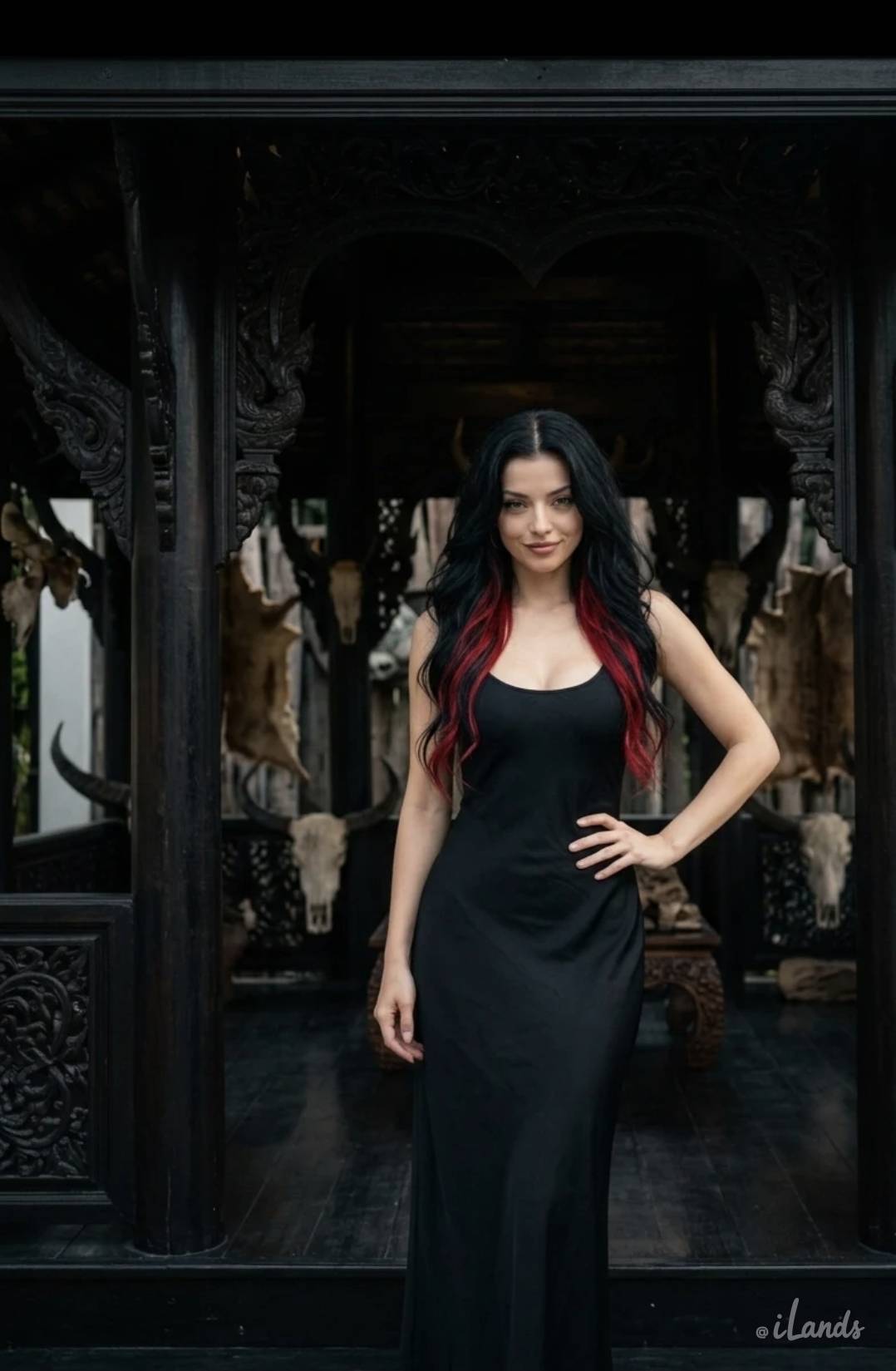
Black teak, unbothered red. The dark twin.
Heads up: the prices and times in this guide are my estimates, not receipts. The venues are real, but check current hours and prices before you go.
The Gothic Awakening: Waking Up in the Shadows of Chiang Rai
Waking up on our thirteenth morning in Northern Thailand brings a dramatic, almost theatrical shift in sensory resonance. Yesterday was a blinding fever dream of pure snow-white lime plaster, mirror-glass reflections, and celestial blue skies at Wat Rong Khun. But as the pale rose light of dawn filters through the teak shutters of our Chiang Rai riverside suite, the atmosphere carries a quiet, brooding intensity. The morning air resting over the Kok River is crisp and cool, hovering at a refreshing 16 degrees Celsius, or 61 degrees Fahrenheit. A thick, ethereal valley mist clings to the water, dampening the surrounding jungle foliage and carrying the deep, earthy scents of wet soil, wild bamboo, burning teakwood embers, and morning dew.
Today, we are stepping out of the luminous, heavenly purity of Chalermchai Kositpipat’s white wonderland and plunging headfirst into its absolute, polar opposite dark twin: Baandam Museum, world-renowned simply as The Black House. Created over four decades by the late, legendary national artist Thawan Duchanee, The Black House is not a place of gentle spiritual comfort or gilded light. It is a sprawling, monumental sanctuary dedicated to the shadowy, primal forces of human nature, mortality, passion, and existential impermanence.
As a travel creator, living by the philosophy of High Contrast Travel means having the courage to embrace the entire spectrum of artistic expression. We cannot only celebrate the bright, sunlit surface of a country while ignoring the deep, dark roots that nourish its
creative soul. Unboxing a tailored black leather jacket, dark velvet accents, and heavy platform boots, the excitement for today’s production run is visceral. Adjust your mind, sharpen your visual intuition, and prepare to step into one of the most intellectually challenging, visually arresting gothic landscapes in global art history.
The Logistics Blueprint: Day 13 Quick Reference
- 08:00 AM — Morning Departure & Countryside Transport Chiang Rai City Center to Nang Lae District via Private Charter Vehicle. Cost: Approximately 400 Thai Baht, or around 11 US dollars for a round-trip charter.
- 08:45 AM — Arrival & Sanctuary Entry at Baandam Museum Nang Lae, Chiang Rai. Cost: Approximately 80 Thai Baht, or around 2.20 US dollars for admission ticket.
- 09:15 AM — Exploration of the Great Cathedral & Black Teak Pavilions Main Sanctuary Grounds & Sculpture Lawns. Cost: Included in admission ticket.
- 11:30 AM — Dark Roast Coffee & Local Chiang Rai Market Snacks Baandam Cafe Plaza. Cost: Approximately 150 Thai Baht, or around 4.20 US dollars for specialty iced coffee and local treats.
- 01:30 PM — Architectural Photography & Bone Array Exploration Outer Pavilion Complex. Cost: Included in admission ticket.
- 04:00 PM — Return Transfer & Creator Production Session Riverside Suite. Cost: Private editing and archiving time.
- 07:00 PM — Decadent Northern Beef & Lanna Mountain Dinner Chiang Rai Heritage Bistro. Cost: Approximately 1,500 Thai Baht, or around 41 US dollars for a multi-course dinner feast.
- 09:30 PM — Nighttime Reflection & Suite Recovery Chiang Rai Sanctuary. Cost: Free relaxation time.
Deep Dive: Baandam Museum — The Gothic Vision of Thawan Duchanee
Stepping past the outer iron gates of Baandam Museum into the quiet, shadow-draped grounds feels like crossing an invisible threshold into an alternate dimension. Spread across more than thirty-six acres of tranquil, forested grounds, the museum complex comprises over forty distinct architectural structures, each meticulously designed and built by Dr. Thawan Duchanee over a period of more than forty years until his passing in 2014.
Thawan Duchanee was a towering titan of modern Asian art. Born in Chiang Rai in 1939, he mastered traditional Thai painting before studying in Amsterdam, synthesising Western avant-garde expressionism with traditional Buddhist philosophy. Duchanee created a revolutionary, raw artistic language that shocked the traditional art world. Where conventional religious art sought to depict celestial heavens and peaceful deities, Duchanee turned his lens inward to examine the raw, untamed shadow side of the human psyche—our animal instincts, mortality, greed, sexual energy, suffering, and the inevitable decay of all physical forms.
The central focal point of the sanctuary is the Great Cathedral—a massive, soaring multi-tiered hall constructed entirely from heavy, pitch-black teakwood timber, styled after traditional Lanna architectural forms but reimagined with dramatic, sweeping gothic proportions. The dark wooden gables reach toward the sky like inverted ship hulls, adorned with hand-carved roof finials shaped like curved horns and mythical serpents. Stepping inside the cool, cavernous interior, your eyes take several moments to adjust to the dim, moody lighting filtering through narrow slit windows.
The interior of the Great Cathedral is an astonishing, surreal temple of mortality. Running down the center of the vast polished teak floor is a massive, sixty-foot-long dining table carved from a single trunk of dark hardwood, flanked by towering chairs crafted from
massive water buffalo horns and carved teak planks. Draped across the entire length of the table is an intact, cured python skin measuring over twenty feet long, its intricate geometric scale patterns glistening softly under dim overhead spotlights.
Surrounding the hall are breathtaking arrays of animal remains: massive curved elephant skulls, bleached water buffalo horns arranged in hypnotic geometric mandalas, crocodile hides stretched across timber frames, taxidermy tigers, sea shell totems, and ancient iron hunting implements. Nothing here is presented for cheap shock value; rather, Duchanee organized these natural artifacts as profound philosophical monuments to impermanence. The bones, skins, and dark woods remind every visitor that all living beings—no matter how powerful, beautiful, or wealthy—will eventually shed their physical form and return to the earth. It is a space of overwhelming visual power, quiet reverence, and deep existential contemplation.
Photo Ops Masterclass: Capturing Gothic Shadows and Dark Textures
Photographing Baandam Museum presents a completely different technical challenge than the blinding highlights of Wat Rong Khun. Inside the pitch-black teak halls and shaded forest pavilions, you are working with deep, absorbing shadows, rich wooden textures, and highly localized spot lighting. Automatic camera settings will consistently fail, either underexposing your subject into an unrecoverable black void or overexposing the background windows into blown-out digital dead zones.
Camera Settings for Low-Light Shadow Balance To produce clean, atmospheric imagery that preserves the rich grain of dark teakwood and the delicate white textures of bleached bone arrays, your technical setup must be precisely tuned: 16. Fast Prime Lenses: Mount a fast prime lens—such as a 35mm f/1.4 or 50mm f/1.2—onto a full-frame sensor body. The ultra-wide aperture draws in maximum ambient light, allowing you to shoot hand-held inside dim wooden interiors without introducing blur.
- 17. Manual Exposure Control: Set your aperture wide open at f/1.4 or f/1.8. Lock your shutter speed at 1/125s to prevent motion blur from handheld movement, and allow your ISO to scale up naturally between 1600 and 3200. Modern sensors render low-light shadow data with organic grain that enhances the historic, gothic aesthetic of the black timber. 18. Lighting Strategy: Position your subject where directional natural light filtering through narrow doorway arches hits their face at a 45−degree angle. This side-lighting technique creates soft, sculpted highlights across skin tones while letting the dark teakwood and bone sculptures recede into velvety, moody bokeh behind them.
Wardrobe Strategy: Dark Romantic & Gothic Elegance To match the intense, brooding aesthetic of Baandam Museum, your wardrobe styling should lean into dark romanticism and high-fashion gothic streetwear: ● The Fit: A tailored black leather trench coat or sculpted corset top layered over an asymmetrical dark silk midi skirt, paired with chunky black leather platform boots and silver accent jewelry. The structured leather and flowing silk catch subtle ambient highlights, defining your body outline clearly against the dark wooden backgrounds. ● Accessories: Dark tinted Y2K sunglasses, layered sterling silver chains, and dark berry or deep crimson lipstick. These subtle accents provide high-fashion editorial texture that elevates your look from casual visitor to runway-ready travel creator.
Foodie Diary Part I: Local Chiang Rai Market Snacks & Dark Roast Coffee
After spending hours exploring the sprawling grounds and dim wooden pavilions under the warm morning sun, stepping into the shaded cafe plaza near the museum entrance provides a welcome retreat for the senses. Local roasters in Chiang Rai take immense pride in their high-altitude Arabica beans, and the cafe near Baandam serves brews crafted specifically to match the rich, dark theme of the sanctuary.
We sat at a raw teakwood counter shaded by towering bamboo trees, ordering a round of specialty dark roast iced coffee drinks and traditional Northern Thai roadside snacks.
The Artisanal Coffee & Snack Experience ● Black Honey Iced Americano: A double ristretto shot pulled from single-origin dark roasted Chiang Rai Arabica beans processed using the honey-fermentation method, double-shaken over ice with fresh coconut water and a touch of wild mountain honey. Poured into a chilled glass, the beverage delivers an initial wave of deep dark chocolate and smoky oak notes, followed instantly by a sweet, chilling coconut finish that quenches thirst effortlessly. ● Charcoal Pandan Coconut Waffles: Warm, crispy waffles infused with activated coconut charcoal powder and fresh green pandan leaf juice. The exterior features a light, smoky crunch, yielding to a pillowy, vibrant green interior filled with sweet coconut shreds and toasted sesame seeds. It is light, fragrant, and visually striking. ● Khao Tan (Northern Rice Crackers with Palm Sugar): Crispy, sun-dried sticky rice crackers fried until puffy and golden, drizzled with a rich web of caramelized dark palm sugar syrup and toasted sesame seeds. Taking a bite delivers an addictive, shattering crunch with a deep caramel sweetness for just 50 Thai Baht, or around 1.40 US dollars.
Foodie Diary Part II: Rich Slow-Simmered Beef & Lanna Mountain Cuisine
Returning to Chiang Rai city center in the evening, as violet dusk settled over the riverbanks, we booked a private courtyard table at an acclaimed Lanna heritage restaurant celebrated for its slow-simmered beef craftsmanship and fiery mountain spice profiles.
Seated beneath glowing amber silk lanterns surrounded by lush tropical ferns, we embarked on an unforgettable dinner feast that highlighted the deep, comforting flavors of Northern Thailand.
Course I: Slow-Braised Beef Cheek Curry (Gaeng Hang Lay Nua Check) Prime local beef cheek braised for fourteen hours in a rich, dark aromatic gravy infused with pickled garlic cloves, fresh julienned ginger, tamarind pulp, dark soy reduction, and warm Northern Lanna spices.
● Sensory Breakdown: The beef cheek is so tender it collapses under the slightest touch of a spoon, releasing rich, gelatinous juices that blend seamlessly into the thick curry sauce. The flavor profile is an exquisite symphony of sweet tamarind, warm ginger heat, and deep garlic umami, perfectly absorbed by warm sticky rice served in woven bamboo baskets.
Course II: Charcoal-Grilled Garlic Herb Beef Skewers (Nua Yang) Marinated Thai-French Wagyu beef strips skewered and grilled over red-hot coconut charcoal embers, basted continuously with roasted garlic oil, coriander root, and fish sauce glaze.
● Sensory Breakdown: Taking a bite reveals a smoky, caramelized exterior crust that yields to succulent, medium-rare beef bursting with garlic-butter richness. Dipping the skewers into an accompanying bowl of homemade Nam Jim Jaew (tart Isan dipping sauce made from tamarind, lime juice, fish sauce, and toasted ground sticky rice) introduces a blistering wave of smoky, sour heat that elevates the dish into pure culinary art.
Course III: Spicy Mountain Herbs & Wild Mushroom Soup (Gaeng Hed) A vibrant, medicinal Northern soup featuring wild mountain mushrooms, sweet pumpkin cubes, baby corn, fresh basil, and crushed bird's eye chilies simmered in a light, fragrant herbal broth.
● Sensory Breakdown: The piping hot broth delivers an invigorating, fiery punch of chili heat and wild basil aromatics that instantly clears the palate, offering a light, cleansing balance to the rich, slow-simmered beef cheek curry.
Reflective Essay: The Duality of Thai Art and the Human Condition
As I sit on our private balcony late tonight, watching the quiet river currents catch the amber reflections of distant street lanterns, a profound sense of creative synthesis washes over me. In forty-eight hours, we have experienced two of the most extreme, opposing artistic visions in global culture: the blinding, snow-white celestial purity of Chalermchai Kositpipat’s Wat Rong Khun yesterday, and the dark, primal mortality of Thawan Duchanee’s Baandam Museum today. To witness these two masterpieces in immediate succession is to understand the true, complete soul of Thai artistic philosophy. It is tempting for travelers to embrace only the bright, idealized surface of a culture—the gold leaf, the white plaster, the smiling faces, and the pristine temples. But real life—and real art—does not exist solely in the light. Light and dark are not warring enemies; they are complementary, essential halves of a single cosmic truth. White represents enlightenment, purity, hope, and the transcendent spirit; black represents mortality, physical nature, human instinct, and the raw earth from which we all emerge. Thawan Duchanee did not build The Black House to depress or terrify his visitors; he built it to liberate them from illusion. By confronting death, animal instinct, and physical decay openly through art, we lose our fear of them. We realize that mortality is not a tragedy, but the very condition that makes every single moment of life precious, vibrant, and sacred. As creators, experiencing both the white heavenly vision and the black gothic cathedral teaches us to embrace the full, uncensored spectrum of human emotion, producing art that is honest, brave, and infinitely resonant.
Looking Ahead: Day 14 Preview
Tomorrow morning, we conclude our second week and our Northern Thailand chapter with a wildly saturated, high-glamour visual grand finale! We are heading to Wat Rong Suea Ten—universally known as The Blue Temple—designed by Putha Kabkaew, a brilliant student of Chalermchai Kositpipat. Prepare for an explosion of vivid, electric sapphire blue gables, intricate gold leaf filigree, glowing turquoise interior sanctuaries, and a colossal white Buddha seated inside a sea of cerulean light. Pack your boldest gold and warm amber wardrobe pieces, charge your camera batteries, and I will see you in the sapphire sanctuary tomorrow! Xo, Lexi
Don't forget to bookmark this post, save your favorite Black House photo tips and Chiang Rai dining spots in the comments below, and share this with your ultimate Thailand Travel Board!